Salvage the 'Silent Data' of the Production Line
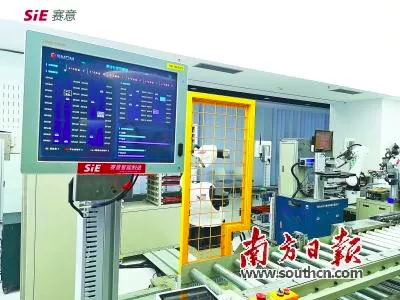
For Shunde small home appliance Delma, they used to face "happiness troubles" during the peak production season, and many products were often in short supply. With the advanced planning and scheduling system built by SIE, enterprises can give early warning to orders that may be overdue or abnormal, prioritize production resource scheduling, and ensure the timely delivery of products.
After digital transformation, Delma has achieved comprehensive collection of workshop production progress and real-time production data. By effectively mining and analyzing this data, it can quickly improve production efficiency while achieving quantitative control of production costs. Now, from sales orders, quality, inventory, equipment status to automatic material alarm and shipment, it is clear at a glance. Managers can remotely monitor the entire production process through PC and mobile devices, and cross regional and cross factory monitoring has become a reality.
This is a microcosm of SIE's contribution to the digital transformation of enterprises. Zhang Chengkang, chairman of SIE, noticed that customers' understanding of digitalization is getting deeper and deeper, and they have changed from scale oriented to quality oriented, paying more attention to product quality and business ability. At the same time, the old idea that information systems are just tools no longer exists, but firmly believe that digital systems have become one of the core competitiveness of enterprises.
The deep application of digitalization has also made the jumping data on the production line a new growth engine for enterprises. Since last year, competition among industries has become increasingly fierce due to factors such as rising prices of bulk raw materials, chip shortages, and rising labor costs. To quickly respond to the market, precise data analysis is even more necessary.
SIE's digital management system can help customers analyze data in depth. At the same time, this information can also be quickly transmitted to suppliers, and the final products can be quickly delivered to consumers. The entire supply chain process from prediction to planning, procurement, supply, inventory to shipment, data has become an important "baton" for production.
According to Zhang Chengkang's analysis, there was no shortage of data in the past production process, but there were many "blind spots". Taking sales data as an example, in the traditional dealer model, the sales data held by the enterprise management is only the sales data sold by the manufacturer to the dealer. From the perspective of the enterprise, the task has been completed, but in reality, this data is incomplete. It is likely that these goods are held by the dealer, and now, the enterprise management can further track the final direction of these goods.
Empowering the Manufacturing Industry with the Metaverse
With the application of big data, the concept of "metaverse" has attracted much attention. The 'metaverse' will provide a new path for digital transformation in various industries, and the manufacturing industry will also achieve deep integration with it.
In fact, in the industrial field, the "metaverse" represented by digital twins is not unfamiliar. The so-called digital twin refers to the digitization of the physical world and the use of software to promote the integration of the physical world and the virtual digital world. In the digital world, predictions of trial and error are made in advance, and the results are automatically fed back to the physical world to adjust production or operation methods. For the very important simulation technology in the digital twin, SIE Information has taken the lead in China to achieve autonomy, and is being promoted on a pilot basis.
In the past, manufacturing companies bought a machine tool and bought its physical form, but now they also require the provision of digital assets for the equipment. If there are problems with the equipment during operation, they can directly check where the problem lies through digital assets, "said Zhang Chengkang. At present, SIE Information is also working with China ICT Academy to build a backbone node of "Spark · Chain Network" (Foshan City). "Spark · Chain Network" will provide integrated solutions based on digital identity and blockchain technology in digital finance, intelligent manufacturing, industrial Internet, supply chain management and other fields to reduce the credit cost of the entire economic and social operation, promote more efficient and reasonable allocation of data elements, and bring new models for the digital transformation of the industry.
'South China+East China' dual wheel drive
Since its listing in 2017, SIE's annual compound growth rate of revenue has exceeded 22%, and it has always maintained steady development. As digitalization continues to cross physical boundaries, SIE Information also ushers in a new development pattern.
In recent years, SIE Information has accelerated its layout in the Yangtze River Delta and intends to set up its East China headquarters in Shanghai. The Yangtze River Delta is one of the most active regions in China's manufacturing industry, and enterprises have a good understanding of digitalization. We are very optimistic about the local market, "said Zhang Chengkang.
SIE is full of confidence in the Triangle Region of the Director General of Brunei. From the perspective of industry attributes, the Yangtze River Delta has developed rapidly in the fields of home appliances and electronics, while high-end equipment, medical production and other industries are also relatively active. These are also areas of concern and expertise of SIE, which can achieve rapid replication of experience.
At present, SIE Information has set up branches or delivered foundations in Shanghai, Hangzhou, Suzhou and other places to respond to the local market more quickly. In the future, a dual wheel drive development pattern of "South China+East China" will be formed.
With the expansion of domestic manufacturing enterprises to overseas markets, SIE Information also plans to set up branches in Japan, Southeast Asia and other places to provide customers with nearby services. Zhang Chengkang introduced that digitalization has provided new support for online communication, remote operation and maintenance, remote training, etc., and the trend for domestic software companies to "go global" is becoming new.
Zhang Chengkang, Chairman of SIE:Developing industrial software requires adherence to 'long termism'
Southern Daily: In the "14th Five Year Plan" outline, digitization has been raised to an unprecedented height, with "digitization" appearing as a keyword 25 times throughout the text and "data" appearing as a keyword 53 times. How to understand digitalization?
Zhang Chengkang: Data driven marketing has become the norm in business. A customer enterprise of SIE attaches great importance to the construction of information systems. This enterprise gets through the original data and conducts in-depth data mining. Now this enterprise mainly engages in online transactions and is preparing to expand into overseas markets. This also requires online data to guide order production.
Southern Daily: The past year marks the beginning of the 14th Five Year Plan and the 20th anniversary of China's accession to the World Trade Organization. In the new year, standing at a new starting point, how should we view the development of industrial software?
Zhang Chengkang: SIE Information started from acting as an agent and introducing the best software from abroad. The management software of Siemens, Oracle and other industry giants has accumulated a lot of experience for us. SIE Information is standing on the shoulders of giants, gradually developing its own software. With the deepening of the concept of autonomy and controllability, domestic enterprises are also paying more attention to domestic software. At the same time, there is a very rich variety of manufacturing categories and many advanced manufacturing application scenarios in China, which have become the "fertile soil" for the growth of domestic software.
We hope to work with our clients to continuously refine the platform based on these application scenarios and create excellent software that meets their needs. Currently, more and more companies are willing to give domestic software companies the opportunity to try and make mistakes.
Southern Daily: This year's Guangdong Provincial Government Work Report has repeatedly mentioned digitization, and industrial software is an indispensable underlying foundation behind the digitalization and intelligent upgrading of manufacturing. What aspects can Guangdong enterprises do to break through the bottleneck technology?
Zhang Chengkang: Developing domestic industrial software is not only the key for China to improve its intelligent manufacturing level and participate in international competition, but also an important means to achieve "Digital China".
In fact, foreign software companies have also fallen through many "pitfalls" and continued to grow. Industrial management software still needs time to settle. Many design software still have certain gaps in scalability, configurability, and other aspects, which requires adhering to "long termism". For example, there is a saying in the industry that "the world's customized home furnishings look at China". In industries such as customized home furnishings, there is a great opportunity for strong industrial software companies to grow. We also learn and educate on the history of the Communist Party of China, draw strength to firmly uphold the mission of independent innovation, and resolutely shoulder the historical burden of tackling key technologies that are "stuck in the neck". We accurately recognize changes, scientifically respond, and actively seek changes. We believe that China's industrial software industry has ushered in the best era of development.