Nanfang Daily | Digitalization makes orders come back, and SIE forum reveals these information
"The biggest value of digitalization is how to combine data applications, the latest data technology and scenarios, and apply them to practice, so as to bring long-term value to enterprises." Zhang Chengkang, chairman of SIE, said.
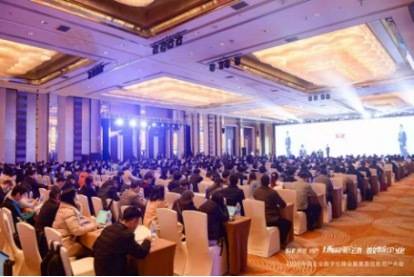
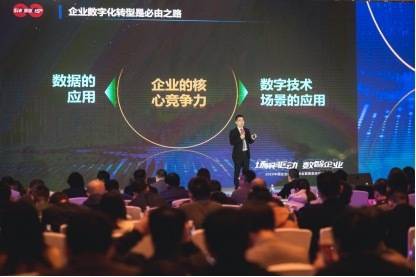
On December 18, Southern Metropolis Daily reported that the 2020 China Enterprise Digital Summit and the main forum of SIE User Conference with the theme of "scenario driven digital intelligent enterprises" was held in Shunde, Foshan. This conference, with "scene" and "digitalization" as keywords, attracted over 800 corporate executives to attend. On that day, Zhang Chengkang shared the theme of "How to Build a Digitalized Enterprise Driven by Scenes".
Simple digital tools can evaluate new business opportunities
In Zhang Chengkang's view, digitalization is not mysterious. Returning to its origin, according to Schumpeter's viewpoint, it is a new combination, and changes are all new combinations. Digitized resources will continuously penetrate every corner of various industrial chains and traditional enterprises through various forms, generating countless new scenarios and combinations.
For example, during the epidemic, online education, online office, and so on have created many "new combinations".
He gave several examples. The first one was a questionnaire, which used to be distributed to various road points for collection. However, a company did online research on children's sunscreen products in third to fifth tier cities, and used platforms such as Tiktok and Taobao to let users feedback their feelings, purchase intentions and other information. It took only one week to complete more than 3000 samples.
The second example involves user design, where a host communicates with 100 store employees and consumers across the country in real-time online to gather creative ideas from different elements to combine and design product prototypes. In the past, many designs were done behind closed doors, with design and market being separated. Designers had to visit 10 stores, which took a very long time; Now, by designing the problem on the same day and targeting 100 employees at the same time, we can collide with the creative ideas of the product prototype.
A very simple digital tool has greatly changed the traditional way of market research. Through data-driven means, it has achieved the evaluation of business opportunities, the selection of new product content, feedback on brand business, and even activated private domain traffic, "said Zhang Chengkang.
Informatization places greater emphasis on processes, while digitization considers connectivity
As an industry veteran, Zhang Chengkang has also experienced the transformation from informatization to digitization.
Zhang Chengkang gave an example: an entrepreneur reported that ERP, which he had been using for more than 10 years, was not very effective. As a boss, he couldn't see a lot of data, and its only function was to generate reports. But when building a digital factory, he purchased a lot of automation equipment and needed to connect data and equipment. It was only then that the entrepreneur realized that if he hadn't built an ERP system in the past, building a digital factory would be just talk on paper now. "Originally, this equipment could also retrieve data from ERP, suppliers could also retrieve data, and some equipment data could also come from here. Warehouse data and procurement data could all come from there. This was something he never thought of before.
Zhang Chengkang analyzed that previously, when enterprises implemented ERP systems, they talked about how to solve problems such as processes, costs, and efficiency. However, in the digital age, more attention is paid to how to connect, how to establish interconnectivity, how to value users, create new ways, and achieve benefits in scenarios.
More than 20 years ago, Zhang Chengkang entered this industry with two main systems for enterprise information systems: MRP2 (Manufacturing Resource Planning) and OA. Now, the front-end facing user layer may include collaborative office, digital marketing, digital supply chain, and personalized customization.
He believes that many enterprises build information systems in a chimney style model, and the middleware will become increasingly important in the future. Currently, business middleware and data middleware are important means for large enterprises to build informationization and dataization in recent years, that is, how to utilize the power of middleware to provide standardized technical platforms for microservices.
There are also some technologies, such as ERP, HR, finance and other control systems, that will be combined with many new data technologies in their solutions, including big data, artificial intelligence, cloud services, the Internet of Things, etc., to drive the future development of intelligence and digital "intelligence", which is also an investment opportunity for IT in the next five years.
From process transformation to the implementation of "unmanned factory" planning
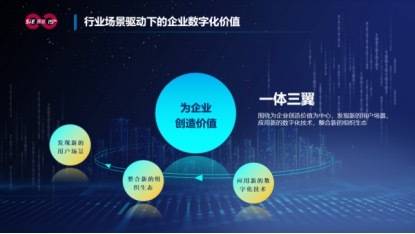
How can we help businesses enhance their data-driven value? Zhang Chengkang believes in discovering new scenarios, utilizing new technologies, and integrating new organizational ecosystems.
SIE divides the scenes into "small scenes", "medium scenes" and "large scenes", and implements corresponding technologies and solutions by "measuring" the "scenes".
Accurately identifying and understanding the pain points and needs of core business scenarios such as production and decision-making in small scenarios, helping them quickly obtain digital transformation opportunities and backend solutions; The medium scenario makes full use of the new generation of information technology, such as 5G, intelligent manufacturing, industrial Internet and big data, through business surveys, to insight and discover future business problems, improve enterprise operating efficiency and marketing decision-making efficiency, and make business decisions more scientific; The large-scale scenario represented by unmanned factories forms a highly automated mass production based on the integration of human, machine, electricity, and software through human-machine collaboration in the manufacturing process and the application of new technologies, compressing production costs and reducing personnel dependence.
SIE is moving towards the planning and implementation of the entire 'unmanned factory' from the transformation of one process. Zhang Chengkang found that these customers are also very concerned about building unmanned factories.
Among SIE's customers, there is an enterprise called Mengna Hosiery. The boss's ambition is to become the world's largest hosiery enterprise. However, due to the epidemic situation, many orders are about to be lost. Foreign customers come to investigate, and the original plan is not necessarily to purchase so many socks. However, seeing that the automation and digitalization of Mengna Hosiery are very high, foreign customers believe that the boss of Mengna Hosiery has a lot of ideas, and immediately placed a list of 300 million pairs of socks.
Many customers are willing to cooperate with companies with ideas for a long time, "commented Zhang Chengkang.
The benefits that digitalization brings to enterprises go far beyond this. Zhang Chengkang introduced that this company is about to build a second factory in Jiangxi. Previously, one worker could only view 3 sets of equipment, but now they can view 20 sets of equipment at the same time, saving 80 million yuan in labor costs per person per year.
From a cost perspective, Zhang Chengkang proposed a "scissors gap principle", which means that in the future, as labor costs become increasingly high, the costs of automation and informatization will become lower and lower.
Through the application of AI vision, problems can be detected in a timely manner, and there have been changes in scheduling, efficiency, and other aspects. Now, this enterprise's efficiency has increased by 30%. ”Zhang Chengkang said that digitalization brings dual effects of cost reduction and efficiency improvement to enterprises.
At present, nine of SIE's customers are in the manufacturing industry. Zhang Chengkang expects that the manufacturing industry can also achieve rapid iteration. In the past two years, SIE's products have been upgraded very quickly, which is now version 8.0. Basically, there is an iteration every six months.
Reporter Gao Xiaoping